UNIVERSIDAD DE COLIMA
FACULTAD DE INGENIERIA MECANICA Y ELECTRICA
MICHAEL ANTONIO GAYTAN MEDINA 7A
absorption
noun
Is a physical or chemical phenomenon or a process in which atoms, molecules or ions enter some bulk phase – liquid or solid material.
Example: The laser has allowed the probing of electronic, vibrational and rotational energy levels through ABSORPTION (and emission) spectroscopy to a greater level of resolution than previously available.
es: absorción
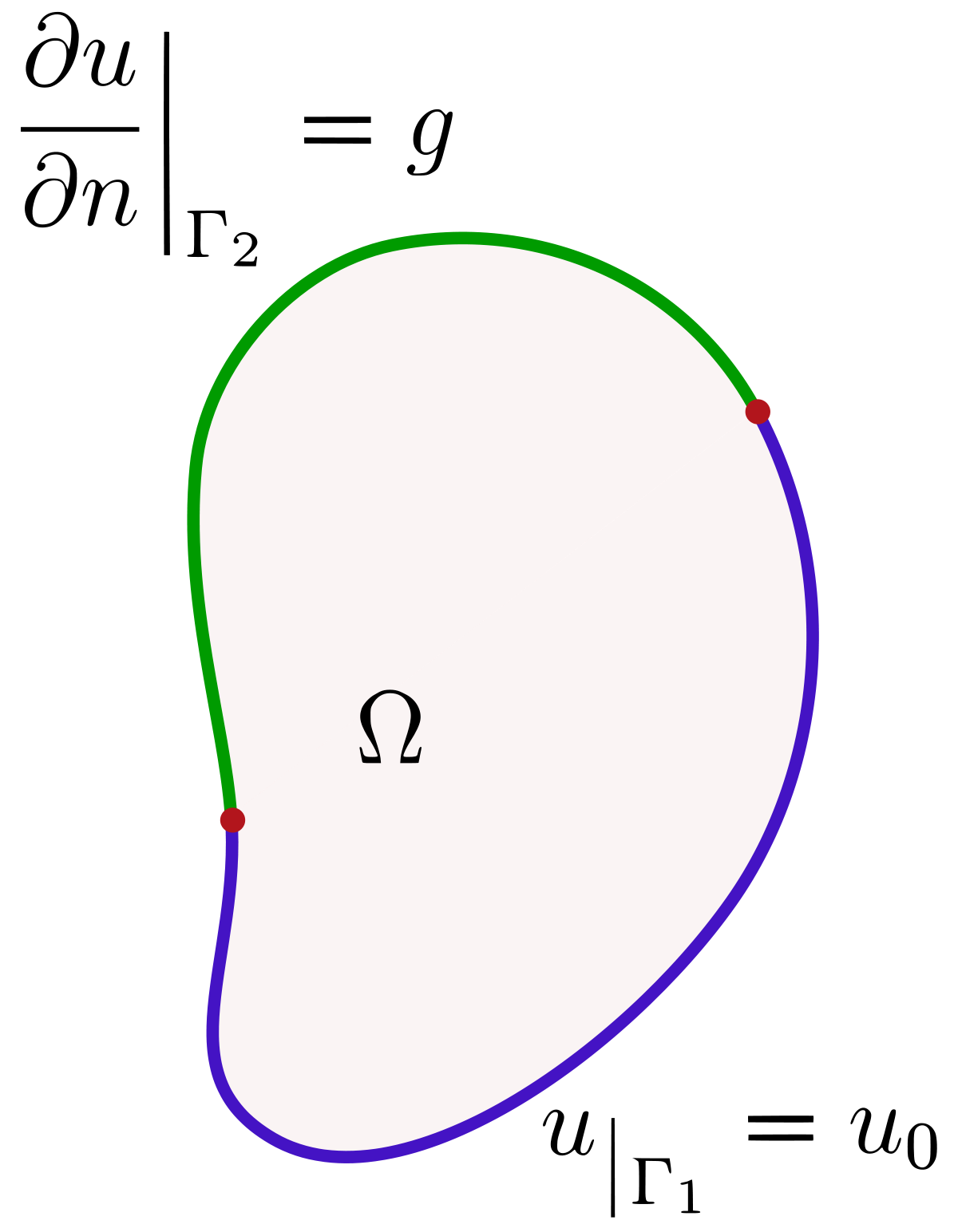
Boundary conditions
NOUN
a condition that is required to be satisfied at all or part of the boundary of a region in which a set of differential equations is to be solved.
Example: Expertise is necessary to apply the appropriate BOUNDARY CONDITIONS and forces to the model to extract the relevant data.
es: Condiciones de borde
convection,
noun
the movement caused within a fluid by the tendency of hotter and therefore less dense material to rise, and colder, denser material to sink under the influence of gravity, which consequently results in transfer of heat.
Example: Blanching under higher steam pressures increase the temperature, improves steam CONVECTION, increases the blanching rate, decreases steam loss, and produces higher reduction in the microbial contamination.
es: conveccion
coordinate systems
NOUN
is a system that uses one or more numbers, or coordinates, to uniquely determine the position of the points or other geometric elements on a manifold such as Euclidean space.
Example: The prototypical example of a coordinate system is the Cartesian coordinate system. In the plane, two perpendicular lines are chosen and the coordinates of a point are taken to be the signed distances to the lines.
es: Sistemas coordenados
Emissivity
NOUN
is defined as the ratio of the energy radiated from a material's surface to that radiated from a perfect emitter, known as a blackbody, at the same temperature and wavelength and under the same viewing conditions.
Example: Emissivity can have a value from 0 (shiny mirror) to 1.0 (blackbody). Most organic, painted, or oxidized surfaces have emissivity values close to 0.95.
es: Emisividad
Energy balance
NOUN
Energy balance is simply the relationship between your energy input and your energy output.
The complete energy equation looks like this:Energy balance = energy input – energy output
Example: METHOD To gain an actual representation of the surface ENERGY BALANCE, an Intensive Observation Period (IOP) was carried out on 19 th June 2006 at 10:30AM During this period, the necessary data was obtained.
es: BALANCE DE ENERGÍA
Heat conduction equation
NOUN
Can be derived by performing an energy balance on a differential volume element.
Example: The one-dimensional heat conduction equation in rectangular, cylindrical, and spherical coordinate systems for the case of constant thermal conductivities.
es: Ecuación de conducción de calor
Heat flux
NOUN
is the rate of heat energy that passes through a surface. Depending on the exact definition of heat flux, its unit can be expressed as either W/m2 or W.
Example: The second experiment measured sensible HEAT FLUX (H ) by the eddy correlation method. The third experiment measured momentum and HEAT FLUXes by the profile method.
es: FLUJO DE CALOR
Insulation
NOUN
material that is used to stop heat, sound, or electricity from escaping or entering.
Example: The high temperatures of 650°C - 700°C may still be enough to damage INSULATION and anneal the conductor though.
es: Aislamiento
Internal energy
NOUN
is the energy contained within it. It is the energy necessary to create or prepare the system in any given internal state.
Example: As expected the rate constant increased with temperature due to the more INTERNAL ENERGY in the system, making it a lot easier to cross energetic barrier from reactants to products.
es: Energia interna
negligible
noun
too slight or small in amount to be of importance.
Example: A maximum deflection of 1mm is again NEGLIGIBLE and is thus an extremely acceptable value.
es: despreciable
Thermal conductivity
NOUN
refers to the intrinsic ability of a material to transfer or conduct heat. It is one of the three methods of heat transfer, the other two being convection and radiation.
Example: However, from k values (THERMAL CONDUCTIVITY of glass) calculated and comparing to the literature value, this suggests that a set of reliable results produced.
es: CONDUCTIVIDAD TÉRMICA
Thermal diffusivity
NOUN
is the thermal conductivity divided by density and specific heat capacity at constant pressure. It measures the ability of a material to conduct thermal energy relative to its ability to store thermal energy. High diffusivity means heat transfers rapidly.
Example: The THERMAL DIFFUSIVITY is the controlling factor. This approximates to that of....
es: Difusividad térmica
Thermal symmetry
NOUN
A heat transfer problem that is symmetric about a plane, line, or point is said to have thermal symmetry about that plane, line, or point. ... The thermal symmetry boundary condition is a mathematical expression of this thermal symmetry.
Example: Another very important case, that can be used for solving heat transfer problems involving fuel rods, is the thermal symmetry.
es: Simetría térmica
unsteady
noun
liable to fall or shake; not steady in position.
Example: No space occupying lesion. - continued tremor in hands, delirium tremens. - disorientated, incontinent of faeces, mobile but extremely UNSTEADY on feet.